new zealand music blog

Jeezy ft Jay Z - Seen It All

Originally published at Passionweiss

Presidential parties, museum tours and marriage ensure we won’t be getting ‘98 Jigga bars anytime soon, but in 2014 “Seen It All” is as close as it gets. Jay-Z shunned Kanye’s wedding to the Kardashian dynasty last month, so there’s a chance Jeezy may become his new best friend. They’ve worn matching pleather jackets, they knew Pimp C but probably locked their car door when talking to him and they’ve been collaborating since Jeezy’s 2006 single “Go Crazy.” While this evidence may be circumstantial, the duo has a solid track record and the rap Proleteriat needs a break from Jay’s rhymes for the 1%.

The Snowman will never be a lyrical scientist. He’s found his rap formula, which is strictly limited to raspy boasts and A-grade adlibs. No matter how many water features Jeezy adds to the mansion, he’ll never stop rhyming about selling drugs. “Seen it all,” delivers accordingly and Jeezy’s biggest decision is whether to blow the cash at Atlanta strip-club institution Magic or at the mall. His verse is nothing special, but most of us clicked play to hear his guest feature verse anyway.

Then it happens, Jay swoops in during the 1.30 mark and it’s tough to believe these bars came from the Magna Carter Holy Fail sessions. There’s no blatant flow jacking or overdone Basquiat references, just tales of his dope-boy past life over a melancholic instrumental. Jay-Z excels on this track because unlike Jeezy, he refers to specific experiences as a felon. There’s drug connects in Saint Thomas, expanding his fledging empire to Maryland, his uncle’s stabbing and more memories that make you thankful you weren’t Shawn Corey Carter before the fame. Despite snubbing DJ Khaled’s crew for the “They Don’t Love You No More” shoot, he might even attend the video for this one. While no one is proclaiming this as Mr Beyonce’s comeback, Jay can still deliver.

Caninus - The Grindcore Band Fronted By Two Dogs

grindcore

I wrote about this hilarious band with dog vocalists for Vice/Noisey.

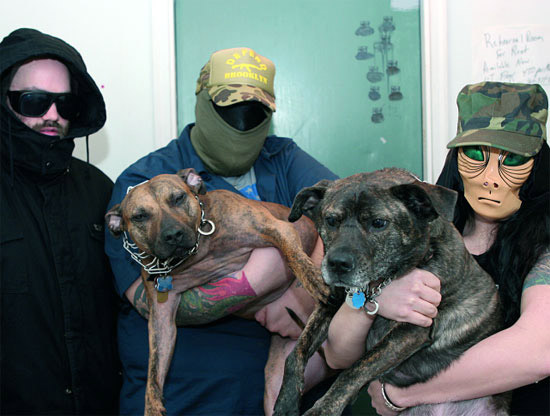
Caninus believe true metal singers walk on four legs and take a shit on your lawn without asking. The New York grindcore band has recorded three albums with dog singers because a pit bull’s bark is more brutal than anything a puny human could muster. They’re not the only ones who recognize the power of animal vocals either. There’s death metal band Hatebeak, who are fronted by an African Grey Parrot named Waldo, as well as YouTube videos of metal monkeys, roosters and cats

Female duo Basil and Budgie acted as the frontmen (or frontdogs) of Caninus until the tragic passing of Basil due to a brain tumor in 2011, and the band is recording a new album in her honor. But the dogs aren’t just barking for tummy rubs, their music has a message. The group are avid animal rights activists and promote veganism, adopting homeless pets and protest pitbull misconceptions. Their song titles include "Bite The Hand That Breeds You," “Locking Jaws” and "Fuck The American Kennel Club.” 
The sweet death barks of Caninus will either send a shiver up your spine or tempt you into humping your neighbour’s leg, and both of those are good things. I spoke to guitarist Belle Molotov about rumors that Susan Sarandon is a fan, their split EP with Hatebeak, Richard Christy of The Howard Stern Show joining the band and if the dogs have ever performed live. 

How did the idea come about to use dogs as your vocalists?
 
We were all fans of grindcore and death metal bands, and we noticed one day that our dogs could growl with the best of them. We learned how to safely get them to growl and bark along to the music and Caninus was born. We got a lot of backlash that we were actually recording the dogs fighting but that's bullshit. Hasn't anyone seen the Husky that can say "I love you?"

Do you find their voices more powerful than humans?

Hell yeah. They were born to do it and the intensity is there and the dogs have an important message to get across. They can be just as uncooperative as human singers as well and can be total divas.

How did you get them pumped up to perform?


We do lots of calisthenics - we practice "give me paw", "rollover", "take a bow" and give them lots of treats. Then the rawhide comes out and the vocals just start flowing naturally.

Has the band ever played live?


There are rumors of live shows and we have been on a stage with the dogs during a live show. No one ever knows when we will play and it always has to be a surprise.

Do the dogs ever listen to the music? How do they respond?

The dogs always perk up when they hear the music and especially the vocals. It's better to see the reaction of other dogs listening to Caninus. It's like they get a look on their face like "I know what they're saying" and they get all riled up. There are some videos on YouTube of dogs listening to Caninus. Look them up.

Tell us about the concepts behind your songs.


Most of the songs concern issues that pit bulls face today. They are the most misunderstood and abused breed out there. The lyrics give the dogs' perspective on all that they face as pit bulls and as dogs. The dogs sit down and try and explain to us what they want us to say and we try our best to put it on paper.

Could you tell us about some of the other activism you're involved with?

Budgie, the last remaining singer, is very active in trying to be pet, to steal your food, and to get into the bathroom garbage to snack on dirty Q-Tips and tampons.

You guys are vegans too right?

Budgie and Basil were never vegans. They usually enjoyed a diet of Dick Van Patten's Natural Balance dog food or raw meat, fruits and vegetables.

How was working with the parrot singer Waldo from Hatebeak?


The singer was a bit of a diva. He's really loud and likes to repeat things over and over again. But overall we got along and we think it was a great split.

What do you think of their vocalist?


His squawk is no match for our growl.

You worked with Cattle Decapitation as well?


Yes, we released a split 7" with the awesome Cattle Decapitation some years ago. That was our last release. Although, there are no actual cows in the band. We were a little disappointed by that but still went forward with the split anyway.

Why did you decide to end the band after Basil died in 2011?


Technically the band is still around. We've been working on a tribute album to Basil as Budgie is still alive and doing great even at 14 years old. She misses her sister and wants a fitting memorial to her. We have a couple songs written but it's been slow going lately due to Budgie's arthritis.

Your website says you've received approval from celebrities like Susan Sarandon?


She loves us- so does Bernadette Peters.

How did you meet drummer Richard Christy, from The Howard Stern Show?


He was a big fan so we asked Budgie and Basil if he could join the band and they said it was cool. Unfortunately Basil never had a chance to meet him in person, but Budgie hopes to meet him one day.

Are there any other animals you'd like to collaborate with?

We'd love to work with the stray cats.


Cappadonna Interview

wu tang clan


By Jimmy Ness and originally published at Passionweiss

During the mid to late 90s, Cappadonna spit deadly verses alongside his fellow Wu-Tang killer bees on “Ice Cream,” “Triumph” and “Daytona 500.” But those bars were nothing compared to Donna’s masterpiece: the final verse on “Winter Warz.”

Darryl Hill held a clinic on how to rap well. He effortlessly delivered some of the most entertaining verses on any Wu release, a huge achievement considering the quality of the Clan’s early work. In around sixty seconds Cappa Donna Goines rapped old English, rhymed a numerical code, compared himself to Freddie Kruger, put his face on a $20 bill and threateningly used the word “discombobulate.”

Cappadonna’s first album, The Pillage remains one of the most underrated releases from the Wu golden era and it seemed like he was only a small step behind Raekwon and Ghostface. Unfortunately, the Clan’s energies dissipated and his later career was inconsistent despite releasing a largely unnoticed, but quality project called The Pilgrimage in 2011. 

We spoke about the ups and downs of his career including recording in the first Wu Tang mansion, being voluntarily homeless, claims that his manager was a police informant and sharing his lyrics with other Wu members. Cappadonna also laughed hysterically while telling me about the time he almost fought a midget Kiss tribute band, so you should read that.


In the early days, local rappers including some of the Wu Tang Clan called you the Staten Island Slick Rick?

The Slick Rick of Staten Island, yup. Because that’s the style that I had, you know. I had the clothes plus I had the big jewellery. Even when I was young I was doing that. I was wearing slacks. I didn’t wear jeans until I was about 18 years old. I dressed like a gentleman with slacks and dress shirts and wore stuff like that to school. I took a brief case to high school instead of a school bag [laughs.] Book bags were disgusting to me. I didn’t want to have anything on my back, you know what I mean? I was like “I’m so fly, I’m gotta put my books in this.”

Method Man said you were the best rapper he knew in the 80s and you would use each other’s rhymes in your music. Is there a particular rhyme that we might know from the Wu albums that was originally yours?

Most of my early demos were by myself, but me and Meth did some demos. We used to hook a speaker up to the window and make mixtapes.

I had so many different lines. I can’t even remember all of them myself, but we all used a little bit of each other’s stuff. I think one of them was “life is hectic” [The final lines from Inspectah Deck’s verse on Cream] or something like that. There were a couple of joints. “Life is hectic” was a song that me, Rae and Meth had a long time ago. We all basically took pieces of that and used it in other songs like “Cream.” Meth got so many songs on his album, I probably didn’t even hear them all. We just do stuff like that. Even like “love is love.” It just so happened it was part of another song and it just went well, so we’ve got: “Love is love love, love is love love” and that’s not even my song, it’s Meth’s song. [Cappadonna is referring to the hook he uses on Method Man’s track “Sweet Love.”]

What about “Run?” You used lines about running from the police on your album The Pillage, then Ghostface Killah made a very similar song on Supreme Clientele?

Yeah, Ghost took a lot of reference from the “Run” I did to do his “Run,” and he reworded it a little bit, but basically wrote the same song. A lot of cats did “Run.” Juvenile did his “Run.” Xzibit did a “Run.” They all basically came after the captain. They took a little piece of that, it was good and they just wanted to do it over man. It’s flattering.

When you were in prison, Method Man replaced you in the Wu Tang Clan. How did you feel about the success they were having at the time?

I felt great for them, but when I was in prison I was in combat mode. While they were doing all that, I was in Rikers Island like Three Upper. They call it 374: Adolescents At War. So I was in there. Big up to all my niggas locked up. It was about survival. So when all of my dogs were popping off and on the TV, niggas already knew that I was from Shaolin. They knew that I had skills on the mic. I wasn’t going around about all that though. I was focusing on my bid and after I got out of Rikers Island, I went straight up North. I went to Fishscale, from Fishscale I went to Elmira. I was in the hub for a little while, out all night and all that. So through that whole transition I been popping darts off and watching the Wu Tang grow and watching them do what they doing. Everyone knew I was a close affiliate. I had pictures and all that, of my brothers, with my brothers and when I got back, you know I didn’t pursue no music. I wasn’t looking to get on or nothin. I felt great about everything that was going on, but I had a different thing that I wanted to do. I was a hustler, I was just a hustler man, you know?

Tell us about when you did get back in the studio with them?

At that time, studios weren’t popular like that. You couldn’t just rent them at any time. I had been in some before. Some of them were exquisite and expensive, some of them were homegrown. The majority of them were homegrown studios. So you know, that wasn’t really what “did it” for me, but it was definitely an adventure to be recording in [RZA’s] studio for the first time. We did Ice Cream and another in RZA’s first homegrown studio and it got flooded out right after that, so you know we lost a lot of stuff.

So where did you record The Pillage?

By that time we were doing fairly well, the clan was doing very well. We did that in Jersey, at the first Wu mansion. We were still fixing that up, you know, just bringing in furniture, bringing in stuff and deciding who is going to sleep where and how many beds and rooms were available. So we basically slept there. I slept there to record that album and whenever any Clan members came over it was easy access for them to just jump in the studio with me. Like I didn’t have to go flying nobody out, we never had to do that because we were always right there and everybody could just hear what you were doing and just drop a verse right there. It was the best. It was beautiful.

How was recording with Wu producer Tru Master?

Tru Master was the one that was there engineering the whole time and he made The Pillage into a successful album. Like he was 75% of that album man, and he knew what kind of tracks went well with my voice. He had a special gift for that, you know what I’m saying? Probably not only for me, but for a lot of other brothers that he did work with. Peace to True Master man. Hold your head baby, come home soon. [True Master was imprisoned in 2011 for fleeing court on assault charges.]

Tell us about “Milk The Cow?”

Milking that cow, the best way we know how. It’s just trying to feed your family, and trying to make money and survive. Trying to keep your job, trying to survive, the best way we know how and sometimes to pay that rent you gotta have two jobs. Word.

A lot of your standout verses on “Ice Cream,” “Camay,” “Maria” and “Jellyfish” have been about beautiful women?

Yeah, those verses are kinda raunchy too at the same time. I was never one to try game a chick. I would always just kind of go up to them and be like “Yo, I’ve got four girls but I would love to sleep with you tonight.”

Have you ever thought of buying the number “917 160 49311″ from your verse on Winter Warz? There’s a lot of discussion about it online. Some people even claim they called it and spoke with you.

Nah, that’s a code. Only the ones who know, know what it is. I’ll tell you, the 160 part that’s my building number. 49311, only people who mastered it, know it. It’s just a code.
[On further investigation, 917 is the NYC area code and 49311 spells out a certain explicit word if you associate each letter of the alphabet with a number.]

After your second solo album, The Yin and The Yang was released, you were voluntarily homeless and working as a cab driver. How do you feel looking back on that situation?

At the time I did it, I had a lot of different reasons but one of the reasons was to test the people that were around me. I wanted to see who would be really on my side and there was no way for me to see that because everyone would stick around me because of whatever they thought I had to offer. Once everything was gone and I was looking back, I could see who was really on my side. It was basically a test you know, just to see where I stand and it also gave me the opportunity to annihilate myself. It was kind of like it equally damaged me as much as it gave me morality and strong morals. It definitely was a shot to leg.

Did you feel like you had to give up all of the material excess?

My family started to look at my value based upon what I could do for them and not really look at me as a loving individual. So yeah, I definitely had to give that up. I gave it away mostly to the ones that clung onto it and that’s what they ended up with in the end. They ended up with all of that and none of me.

Your manager Michael Caruso was fired after it was claimed in a Village Voice article that he had been or was a police informant. Can you tell us about that?

I don’t know. I don’t know about his personal life. We did some work together, he worked for me. He was good at what he did and I hired him on those basics. I didn’t do a background check on him. I’m not no kind of agency or anything like that, but he did good work and that’s how I know him. I have no information on his past life and whether or not he was involved with certain activity or not.

Here’s a random question. Ghostface said on Jimmy Kimmel that during a tour you nearly got in a fight with a midget Kiss cover band?!
 
[Laughs] I think I remember something like that very vaguely. I don’t know what happened, but I think they were more or less mad at me because I probably walked across their set. I think the anger came because I was so tall. They were kinda upset about that and when I came in there everyone started focusing on me, but at the end I was with them. I was bouncing with them on their lil set. We were together, so in the end everything worked out and we made it peace. But they definitely wanted to penalize me for stealing their limelight.
You’ve commented in the past that not all Wu Tang members have respected your position and have tried to pay you less than equal share. This is despite close friends like Ghostface or Raekwon claiming that you’ve been an important part of the group from the beginning.

Do you feel like the members respect you now?

It’s not a matter of whether they respect my position or not, it’s just the fact that if you’re dealing with greed, you’re dealing with greed. Word, because respect is something that you’ve gotta earn, it’s not something that you buy.

How have people received your latest album Eyrth, Wynd and Fyre?

The double album is a classic right now. I call it my “miracle album.” Right now it’s 89 on the Hiphop Billboard Chart, getting great reviews, getting front pages on a couple of websites, getting five mics in a magazine. It’s the highlight of what’s going on right now. It’s the force behind the upcoming album, The Pillage 2. This is the bird that I’m creating so they will know that I’m there. I’m in the area, I’m next door and I’m ready for war.

Speaking of The Pillage 2, how is that going?

It’s going well. I’m getting good cooperation from the involved parties. It was a little tender in the beginning, but now it’s breaking off.

What about the new Wu Tang album, have you contributed yet?

Nah I haven’t done my contribution yet, but the Wu album is in the making, recording and it’s getting done. It’s popping off and more things will be popping off soon, but it’s out there.
Remember Wu Tang is forever. Witty Unpredictable Talent and Natural Game HUH!?

Vintersorg Interview

vintersorg
                             
By Jimmy Ness

This is the extended version of my first feature for Noisey/Vice. You can check it out here.

While you, dear reader, might have enjoyed black metal for the corpse paint, lavish leather outfits and Satan worship, if you were weird like me you listened to it for the educational value. Andreas Hedlund, also known as Vintersorg after the band he founded in 1996, sings about his passion for science, astronomy, philosophy and nature. Long before I peeled off my metal spikes and put away the impaled bovine heads, I spent hours absorbing his thought-provoking brand of metal.

The 39 year-old plays multiple instruments and leads about half a dozen other projects including Borknagar, Fission, Havayoth, Cronian and Otyg. Despite having cult status among fans, he rarely performs live and instead focuses on his job as a primary school teacher.

His music incorporates folk and progressive elements, and has been labeled everything from space metal to avant garde. But one thing is for certain, if you have never heard someone scream about Christopher Columbus over blast beat drumming, you're in for a treat.

Vintersorg recently called me from Sweden and while my 13 year-old self wept tears of joy, we chatted about being a black metal school teacher, his favourite scientific theories and man’s relationship with nature.

When did you become interested in space, science and the earth?

I guess my interest in these subjects came along with the fact that I was born, in a way. Of course I didn’t really investigate it from the very beginning. When you are a newborn, you don’t have the ability to understand who you are and what you are in this kind of world. But as soon as my mind woke up, I was very interested in all of the subjects that refer to man and nature. I live quite remotely from big cities. I live very far north in Sweden quite near the Polar Circle actually, so I’ve always had these elements around me, the elements of nature. For me I didn’t actually think of it as an interest because it was just my ordinary life. Then of course when I grew up I understood that you could choose a life from another perspective - if you are living in a big city or if you’re living out in the desert or whatever. My mind was just open from the beginning from where I was standing. As a child, you just relate to what you see around you.

Why did you start to write about this stuff in your lyrics?

I don’t know really. For me it was very natural to write about this stuff because that was the world I was growing up in. Of course when you spend so many years with these kind of surroundings you start to get more interested in them. I was learning more about nature so when you are learning more about nature, you are learning more about science. From the beginning of course I was looking at nature from a visual point of view, but after a while you start learning about the other stuff behind the obvious visual kind of things. I always felt a very strong connection with science, nature and folklore. I don’t see that they are opposites. Folklore is of course a kind of pagan belief, but they saw nature from a different perspective they didn’t know about science. I don’t blame them. I think folklore still has a place in life. Of course from our historical perspective, but also from looking at nature with a romantic perspective.   

Do you have a favourite scientific theory that you think one day might be proven to be true?

Some years ago I kind of soaked my mind with that stuff for 24 hours a day. I follow the progress in science but not as frequently as I did five, six, seven years ago. I believe Stephen Hawking’s theory called T.O.E (Theory Of Everything). I think somehow you can find out the theory that connects all of the other theories together, but that one is of course very obscure and hard to translate into our way of thinking. I think there is one great theory that will connect all the other theories. I see wholeness in everything actually.

You are a primary school teacher. What grade and what subject do you teach?

I teach children everything from when they are six years old. I teach several subjects right now.  I teach scientific stuff, I also have done some social stuff. I work all my days with children and I think that’s the best way you can have a relationship with humanity because children are so new into this world. They have all this curiosity, they are so open minded. Many adults are also open minded, but when you are a child you don’t have this baggage of cultural stuff, this baggage of religious stuff, you don’t even know what they are. I really like to work with kids because they are so curious about stuff. They want to learn. In seventh grade your mind is filled with other things, your testosterone increases [laughs].

Do any of the students, parents or teachers know that you are a progressive black metal singer?

Yup. I’m 39 years old, so I have parents that are at my age. I live in a small town so they know me perfectly. They know me as a musician and also some of them are my friends and that’s no problem. I’m a very open minded person. I’m very open with who I am and what I do. So everybody knows what I do and everybody’s cool with that. Everybody actually thinks it’s really cool to have a teacher that’s kind of a… well they think of me as a rock star, but I don’t think of me as a rock star. You know the drill.

Are you ever tempted to yell at the students in your black metal voice?

Actually I don’t really do that. Of course kids push your buttons, your invisible buttons at times. But there’s a thing that I do when I go into the school building, I remind myself that the first rule of working with kids is don’t let them push your buttons and when they try to do to it I remind myself that he or she is just trying to do that. But I’m not getting offended by it, so I stay very cool and it’s whatever. I don’t really yell at the children at school with my black metal voice but if you ask my kids at home, they may have another theory about that.

What made you choose a steady occupation over touring full time?

Because of kids again actually. I became a father 9 years ago and before that I was kind of having that debate with myself. Like am I going to become a professional musician all year long? So then I had a son and then it was not a debate for me anymore. It was very clear. It was about the time I was pursuing my teacher degree so it was very natural for me to stay at home, have my daytime job and be with my kids. Then two years later I had a daughter, so for me it’s been a very easy choice to stay at home and be with my children. But I like to do some gigs now and then. So now we are doing some festivals and stuff. With Borknagar, everybody in the band except the drummer has kids so everybody is kind of in the same position.

One of my favourite songs of yours is “The Explorer.” Can you tell us about the concept behind this song?

First of all, that album [Visions from the Spiral Generator] was kind of a leap in another direction. I wanted to make it very clear that this how I feel about life and everything. The song “The Explorer” for me is kind of a statement - that is a little bit who I am. I refer to other explorers in the lyrics a little bit, but for me I see myself as an explorer as well. I don’t know everything, I’ve never been the kind of guy that thinks “Oh, I’m the best in the world, I know everything, I have the authority to that or do this.” For me, I’m totally the opposite. I’m a little bit of a curious guy. I’m a little bit of a shy guy. I think “how is this going to work? What is this all about?” Some would see this as a kind of insecurity, but I know who I am. I always try to be a better person. I want to see how I can benefit things in the world and also that will mean I will be a better person. But also I’m totally a nature freak. I’m not a Greenpeace freak, personally I think they are using the wrong means to do their thing. I don’t quite know how to put it so let me use an example: you see a bulldozer going to put down a rainforest. They drill a hole in the bulldozer’s gas tank, so alright the bulldozer isn’t going to devastate the rainforest, but the fire will.

Your two most recent albums Jordpuls and Orkan are part of a series of four albums, one dedicated to each element of the planet. 
Why did you decide to move from space back down to earth?

For me, I couldn’t really let this kind of stuff go away. The four elements have been my guiding star since I was kid, you know. Of course the four elements in the classical theatrical way isn’t really how we see the world now days cause that’s from the old Greek stuff, but I still like the four elements as kind of a symbolic theme as to how life is built up, how we can feel it, how we can see it, hear it, everything.

You’re not the cliché black metal musician. You don’t wear corpse paint or just sing about negative themes. You’re an open-minded family man. Does that seem strange to you? 

Well I haven’t really thought about it that much. Someone would probably think that I’m not the right one for the job at some times, but on the other hand I like black metal for all of its aspects. I like death metal. I like progressive rock from the 60s and 70s. I like heavy metal from the 80s. I like so many different kinds of music, so I have never tried to adapt myself. I try to express something and I try to express it out of passion. I really feel like I have a kind of addiction to music.

Your folk band OTYG has recently reformed. Can you tell us about the line-up and if you plan to do any shows?

No shows planned at the moment, but we are doing a new album with totally brand new songs. It’s going to be something really special actually. All the members that have been in the band are going to be on the album. So the drummer from the first album is going to do like half of the album and the drummer from the second album is going to do the other half. It’s going to be a big happy family thing.

You are constantly creating new music. How do you stay inspired?

I would say you are asking the wrong guy, cause I don’t really know! I’ve been addicted to music since I was like four to six years old. I’ve done a lot of stuff in my life. I’ve been a caretaker. I’ve been a car mechanic. I’ve done so much different stuff work wise and now I’m a teacher, but music has been my best and most comforting friend since I was very young. I can’t really imagine my life without music. Some people really don’t care about music at all, but for me it’s like a drug. It’s a very friendly drug because it makes you really think and it makes you feel. I can’t explain it more than that.    

Musicians from Scandinavia always seem to have a strong connection to nature. Why do you think this is?

I don’t know really. For me, I’m so bred into it that I don’t really know how to answer. I think everybody is interested in nature, it just depends on where you are living. Here in Scandinavia there are not that much people per square mile so everybody has a relationship with nature in one form or another. But also in terms of the definition, what is nature? A city, isn’t that nature? Well from my point of view its not really, from my point of view nature is a thing that man hasn’t made, but it’s a tricky kind of question. Nature has so many elements that appeal to man. For example, you have a black forest. It appeals to a lot of emotions, so it could appeal to like fear or it could appeal to excitement. It’s totally different depending how you see it. Nature has so many things that man is dependant on and also has so many feelings wound up in it. I think it’s very natural to use that kind of force as an inspiration source.

I heard you’ve actually gone and lived in the wild before?

Yeah, between 96 and 99 I lived in a cabin in the woods. But of course I had some connection with the outside, I cut back into my small town from time to time to get some stuff but for three years I lived in an old cabin and it was actually one of the best things I could do with my life at the time.

Wow…

Yeah, and it just fulfilled my vision of how life could be. When you wake up in that old cabin, it’s 2 minus degrees indoors and you know you have to get up and make a f**king fire. [laughs] You know in the winter I had to go to the lake, and make a really big hole in the ice with an axe to get water. You know that you’re alive when you do that kind of stuff. 

Nardwuar Interview


Written by Jimmy Ness and originally published at Passionweiss

Nardwuar the Human Serviette is a squawky voiced, tartan-wearing Canadian who knows more about his interviewees than they do. The man previously called John Ruskin uses his encyclopedic knowledge of music to shock, impress and enlighten. His unorthodox approach includes asking his targets who they are, giving them presents and freezing in a wide mouthed grin until the camera shuts off. This pulls the humanity out of media-trained celebrities who are usually surrounded by yes-men and unprepared for the baffling torrent of obscure questions and non sequiturs. Pharrell thinks it’s the best interview he’s ever had, Alice Cooper hung up on him, Kid Cudi left mid-way through and Snoop Dogg invited him to his house.

The controversial Canuck also works as a guerilla journalist and has questioned several world leaders, including former Canadian Prime Minister Jean Chrétien who said he didn’t know what pepper spray was, instead claiming “for me, pepper, I put it on my plate.” Finally, Nardwuar plays in several bands, hosts a show on campus radio station UBC CiTR and has more interesting stories than the bible.

After months of trying to pin Nardwuar down for an interview, I caught up with him at Vancouver skate shop Antisocial before his band The Evaporators performed. A group of veteran punks in their 30s and 40s chatted as he rushed around setting up merchandise while wearing his trademark Scottish cap. I watched him while looking for anything that would signal a difference between his on-camera persona and the real Nardwuar. Although I didn’t come much closer to unraveling his true identity, he was a genuinely nice guy, doubled his interview time with me and spoke in rapid-fire mode at all times. We chatted about his research methods, this infamous interview with Blur, Sean Price imitating him, the freeze technique and Canadian rap.

What interested you in music journalism? I heard Sound Proof, a punk and new wave video show, had a lot to do with it.

Yes indeed, thanks for remembering that and thanks for the shout out for Sound Proof! That was a TV show on the North Shore where I lived. Unfortunately, I didn’t get cable, but a whole bunch of other kids at my high school did and they would always say there was some cool stuff on Sound Proof. I was able to actually get videotapes of episodes and was able to check it out. Finally, I actually participated in Sound Proof and that’s when I started doing a lot of interviews.


I couldn’t do Sound Proof until I volunteered at the local cable company though, so I had to volunteer filming council meetings and if you film council meetings then you were allowed to help out with Sound Proof. You had to do some community service, but I was so bad at filming council meetings that I started to laugh and the camera started to go up and down so they said “okay, you can go help out with Sound Proof.”

Around the same time, I got involved in UBC CiTR Radio [University of British Columbia’s campus radio station.] So I was doing a radio show and I was doing the radio interview thing, and then I started doing the video thing. So I decided I would film the interviews, take the audio for CiTR and take the video for stuff like Sound Proof.

Journalism is in your family too. Your mother was a history teacher, but she also wrote a book about a Vancouver bar owner and hosted a television show.

Yes indeed, thank you for digging so deep into the archives. That’s amazing you know that. Well yes, my mom was a member of the North Shore Historical Society. She would drag me to all her meetings, so as a young child I would attend these meetings where all these local writers got together to talk about local history. I got into local history and then as I got into Punk Rock, I got into Punk Rock history. So it all sort of came together. My mom was doing stuff on local Vancouver history so I thought why not do stuff on local Vancouver punk and that got me interested in the roots of punk.


How did you get into other genres?

At first it was only punk rock. I would only interview punk bands and people said to me “hey man, metal is kind of fun why don’t you get involved in metal?” So I was like ok I’ll try metal. And then people were like “you’re stupid to only do punk and metal, why don’t you do rap?” and then I got into rap. And then people were like “there’s electronic music, why don’t you do electronic?” While I was at CiTR UBC radio, there were all different DJs there playing all different genres of music and they would come up to me and go “you’re so stuck in your ways.”


So I guess it was the influence of other people at CiTR UBC Radio, where I still do my show. Also when you do a radio show once a week every Friday, you can’t really discriminate. You eventually run out of punk things to talk about so you’ve got to do metal or you’ve got to maybe interview some politicians. So I think part of it was people telling me. But also having a show once a week you’ve got to interview everyone and you can’t just stick to the punk.

I heard you actually collect and create scrapbooks for artists you’d like to interview?

In the olden days anything that was in the newspaper about punk rock I would clip it out and put it in a clippings file. So I do a similar thing if someone’s coming to town. I open a file on my computer and I jot down information thinking maybe one day this person will come to town and I’ll have all this information ready. Or I dig through my files and stuff that I may have collected previously.


How long do you spend researching an artist? Do you have a team that helps you out?

I do my radio show once a week on CiTR, so generally during that week I have one interview and I think about that interview. That doesn’t mean I spend the whole week doing preparation for that one interview, but I do think about it that entire week. And sure around a radio station, I’ll go like “hey, I’m talking to this ska band called The Toasters from New York City, anything I should ask them?” or “what do you know about ska?” So yeah I do always run things by my friends as well.


How much of Nardwuar is a persona, and how much of it is who you are in real life?

Well every time I get on stage I do get excited and I jump around and I sing in The Evaporators crazily and when I do interviews I jump around and do interviews crazily. So I do get excited once I get on stage, once I’m doing interviews or once I do my radio show. Generally, I kind of think about it in the sense of when you go to a rock and roll gig.

I always was inspired by people like Jello Biafra of The Dead Kennedys. He gets up there and he jumps around so I figure when you have the chance to be able to do your music, jump around as well. I guess you can concentrate on singing, but maybe do it secondly. The same thing when you’re doing an interview. Also you should go full out, because you don’t have much time. You’re only limited to 20 minutes or 10 minutes or whatever so you gotta go in there, ask your questions and get the hell out! But if I had four or five hours, sure I’d love to just sit back and relax. Generally, it’s because I get excited, I get nervous and when you get nervous, you get pumped up and you gotta go fast, fast, fast!

I’m nervous……

So am I!


What about your clothing, your name etc? Do you use this stuff as a special tactic to draw the real personality out of your interviewees or did that just kind of happen by accident?

Well Jello Biafra of The Dead Kennedys is called Jello Biafra [a combination of the brand name Jell-O and the short-lived African state Biafra.] So I thought I could be called Nardwuar, the Human Serviette. So everybody sort of had fun names like that. As for what happens I don’t really plan anything. If it happens, it happens. I don’t really think of it as what you’ve described, I just kind of go and do it because every interview is different. So you go to an interview thinking it’s going to go this way and it never ends up being the way you think it’s going to turn out. So I just keep doing it because I just love it!


During your interview with the band Blur in 2003, drummer David Rowntree throws away your glasses and constantly physically intimidates you. Was the worst interview you’ve ever had?

Well that wasn’t the hardest interview I’ve ever had or the worst because the tape survived. When I interviewed the heavy metal band Skid Row and the heavy metal band Quiet Riot, they didn’t like the interview so much that they destroyed the tape from the interview. So I would say the Blur interview was a success. First off, because the interview happened and the tape survived. Years later actually, Dave of Blur apologized to me because quote “he was on cocaine.” It took him eight years to apologize to me but he actually did… so we can blame it all on cocaine.


[You can read Dave’s apology toNarduwar here. He says he keeps a video of the interview on his phone to remind him to stay drug free.]

I read that you’ve previously been banned from interviewing artists on labels like Geffen and Warner?

Yes, because when I interviewed Sebastian Bach of the hair metal band Skid Row and he destroyed the tape I was using for the interview. He stole my favorite Tuque, that’s why I wear this Tam [Nardwuar’s traditional Scottish hat.] He [Bach] was on that record label, so the people from that record label said “you can never talk to anybody on that record label ever again.” It lasted a few years and then well here I am back. I just interviewed Ed Sheeran the other day and he’s on Warner.


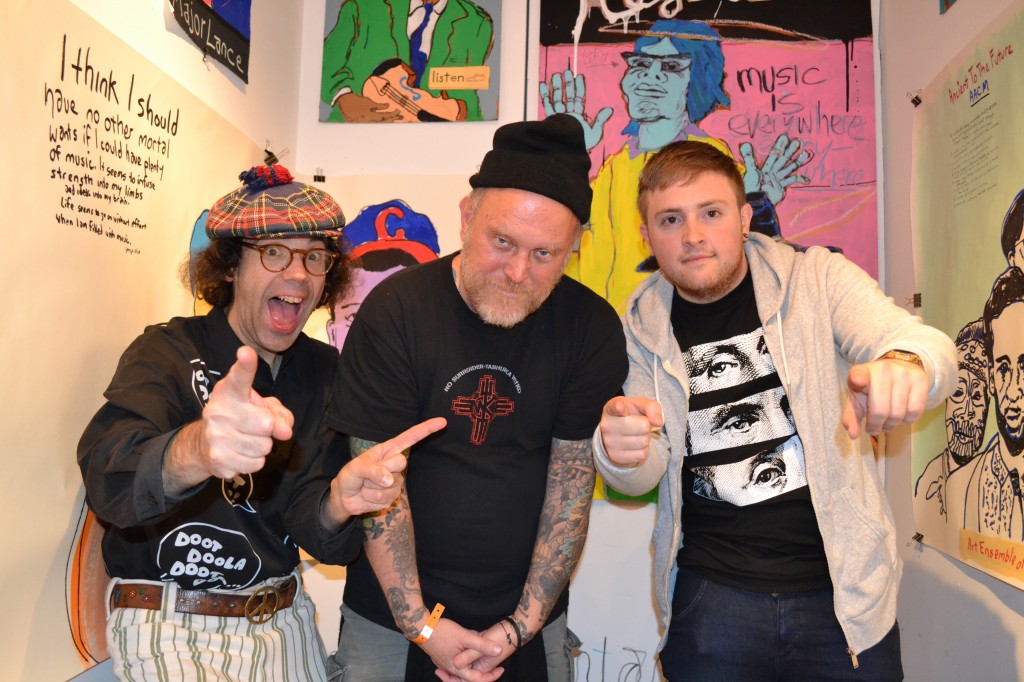
who is nardwuar
Nardwuar, artist and musician Tim Kerr and myself. 

Do you read a lot of music journalism and is there anything about contemporary music journalism you don’t like?

Oh I love the music journalism that I read. The only thing I would say is make more online blogs printable, so you can actually read them, like on the toilet. But I love reading what other people do because I know what not to ask and it’s fun reading interviews so I can get little tidbits here and there. Every interview that is done, even if it’s for a mainstream top 40 outlet, I’ll listen or read it because sometimes there’s tidbits of information out there. So I love all writers. I love all interviews and I get information from them all as well.


You were booking gigs for a little while yourself, but I heard you stopped because they were pretty disastrous. One of the craziest ones was the show at St David’s United Church, can you tell me about that?

Yes. Thank you again, amazing you’re bringing up these relics from my past. That was put on by a guy called Grant Lawrence, he’s my friend. He was in a band called The Smugglers and he managed to get a hold of the church, it wasn’t me. I was co-presenting with him because his mom knew people at the church, and we hired some skinheads to do the security. They did a good job, but unfortunately at the end of the evening they stole the money because they were working the door and they stole the amp for the church organ. So the next day when the people showed up for the church there was no amp to project the organ, that was sort of bad. Plus after the gig we didn’t go into the washrooms to clean them up and we later found out there was shit on the walls. I learnt quite a bit from there. After you do a gig, you should clean up.


I learned kind of the hard way because I thought you just leave. But then I learned when we left the parking lot – it was covered in beer bottles and stuff like that. The gig was a band called The Gruesomes from Montreal and they totally inspired me too because they covered a lot of bands in their set. Like they would cover obscure 1960s bands from Montreal and I was like “wow there’s cool obscure 1960s bands from Montreal?” That got me into ‘60s Canadian punk so that gig was a big turning point for me in 1988.

Did you see Sean Price pretending to be you while interviewing Pharaoh Monch? There was also someone dressed like you in Korn’s Twisted Transistor video.

You’re one of the few people to actually acknowledge that. I say to other people, “hey man I was in the Twisted Transitor video” and they are like “NO!” So thank you for acknowledging that. I am really there. Although, they never told me. They got a Nardwuar lookalike there.


How do you feel watching that stuff?

Well I was honored because Sean Price has a song that goes like “SHUTTHEFUCKUP!!!!” Kind of like the Juicy J song and I think that’s amazing. Pharaohe Monch, just to have him reacting to a fake me was out of this world. I just could not believe it, like this is Pharoahe Monch. I would love to speak to him myself. I guess I did it right there. So it was just something that I don’t think will ever happen again. I was just totally honored.


You’ve interviewed everyone from Jay-Z to Iggy Pop. Do you have many names left on your interview wish list?

Well, originally it was Neil Young, Bill Clinton and Kurt Cobain. I spoke to Kurt Cobain. I’ve tried Neil Young twice, failed both times. I guess I could try again when he comes to town in the next few weeks. Bill Clinton I’ve tried, but didn’t get close to him and was escorted out by other members of the media. It wasn’t like the authorities or anything. It was other members of the media saying “get that guy out of here, he’s Nardwuar, he’s going to cause a disturbance.”


So I really would love to do another presidential United States of America-ish interview with another political figure. I’ve interviewed some of the other prime ministers from Canada, but I’ve never interviewed a president that’s been in office. I’ve interviewed Gerald Ford, ex president of the USA, but I’d like to do some more presidential ones. So those are pretty much on my wish list still. I guess I’m still kind of hoping for Neil Young, but still Bill Clinton. Also if we bring it into the 21st century I would still like to speak to some of the legends of rock and roll like Little Richard or Jerry Lee Lewis. People that may be passing away soon. Hopefully they don’t, touch wood, but I’d like to speak with them because all this history is dying and you have to document it before it all disappears.

Do you personally find time to listen to music and what are you enjoying at the moment? Any rap?

In Vancouver, British Columbia, Canada, there once was a rap artist who I’m still listening to called MC Terror T. I still listen to her and I listen to old school Vancouver rap. There was a group called EQ, which was one of the first groups that ever came out of Vancouver, British Columbia, Canada. So I’ve been listening to some of the old stuff. As for other groups I do my radio show every Friday on CiTR, so there’s tons of music to listen to and I listen to CiTR as much as I can to find about new music. I’m constantly looking for it because I have no idea where to find it myself, that’s why I have to have CiTR direct me on where to look because all the different shows play at night and I can find out what I like.


I basically don’t know much at all. I have to find out what goes on, it takes a little while to find out. Yes even when I’m doing my radio show, as pathetic as it sounds, it takes me hours and hours to figure out what music to play. It’s so difficult.

At the end of every interview you completely freeze in one pose and stop blinking completely. Tell us about this technique.

I have no idea how the hell that happened. I think it happened originally because I was having so much fun that I didn’t want the interview to end. So I was like “ahhhhh!” I was just having fun. I don’t know how it happened!


You always mention Vancouver in your interviews. I just asked you about rap music and instead of talking about American music, you bought it back to Canada. Why do you love it so much?

I guess it goes right back to your first question, my mom. She was in the historical society. When I got into music, I got into local music and I love local scenes. However, if I was in Seattle I would be obsessed with the Seattle rock or rap scene, like Kid Sensation from Seattle or Criminal Nation from Tacoma. Anytime I go to a different city I’m interested in the local scene.


Looking back at your career, you seem to be a big advocate of the D.I.Y ethic when it comes to releasing and promoting music or even doing your radio show?

Yes because to begin with nobody would put on a gig for my band The Evaporators, so the only way to put on a gig is to put it on yourself. Same thing when you do a radio show. You’re doing the radio show, you have to program the music. I was doing my radio show for a little while and I was like “won’t it be cool to put out a record?” So I was inspired by a band in Vancouver called No Exit and they put out the first punk LP in Vancouver and I was given a copy of that record and I thought they can put out a record and they did it totally low budget.


What they did was they took the first Clash record and put their faces over the guys in The Clash so it was kind of a play on the first Clash record, it was totally do it yourself. So I thought I could do a record label, so Nardwuar records started in 1989. Then I thought I can put out a DVD, I can put out a CD and they can have Nardwuar t-shirts. So it started I guess because I saw other people doing it and also in Vancouver in the 1980s, I was inspired by the people that put out records. Because in Vancouver, people were like “ok we’re in a band let’s put out a record!” In other cities, they are like “well, we will put out a record but I don’t know if I want to put out an LP because I want to wait for the big major label deal.”

But here, there was no big major label deal to actually help you out, so you had to do it yourself. And a lot of things with the gigs too – there’s no place to play, there’s no place to do an all ages gig. I wanted to go to the bars, but I couldn’t go into the bars because I was too young, I looked like too much of a nerd. I could have grown a beard, but I still looked like a nerd. I still am a nerd now so I wasn’t allowed in there. You had to organize your own all ages gigs. If I lived in another city, it might have been different. There might have been a regular place to put it on, so you might not have had to do that but it’s different here in Vancouver. That’s why some of the best music is in Vancouver because people work hard. If you can do it in Vancouver you can do it anywhere in the world, because it’s so hard.

Do you have any advice for people looking to pursue music journalism?

I heard Green Day’s Dookie album and I didn’t hear one hit. I had no idea. In other words, my ideas are probably different and totally wrong compared to other people. So I’m trying to learn myself. I’m still trying to get to the top of the rock pile. But I would say what has helped me in my opinion has been being part of a community organization. You mentioned right at the beginning, Sound Proof. The local cable company, going right down there and volunteering for the local video show. Volunteering at CiTR UBC radio, the local campus community station. So I would say that in everyone’s town there usually is a local cable access TV show you can volunteer for or there’s a local campus community station and if you can volunteer and hang out at those places then you’ll learn a hell of a lot about journalism and you’ll meet so many people. I’m still learning. In fact, every time I show up to do my radio show I learn something. I always say, the minute you think you’ve learned everything is the minute you should quit.


What are you hoping to achieve with your career? I know that you were rushed to the hospital with a brain hemorrhage in 1999 and once you came out you felt a lot more determined and focused.

Originally, it was to be pool side with Heather Locklear. However, that’s dating me a bit so I will update it. To be poolside with Heather Graham. Roller girl from Boogie Nights, right? Not Heather Thomas, but Heather Graham. I guess my goal still is to get my own show. I didn’t have my own show on MuchMusic, I was a freelance contributor but I’d still love to do my own show. I guess also, like you say, after being in hospital your goals change and right now actually I’m just happy when I wake up in the morning and I have a pulse and I can breathe. So my goal is to get through the day as you get older.

Well thanks so much and Doot doola doot doo…

Doot Doo!

Check out Nardwuar's video channel