
Hurricane Chris Interview

In the late 2000s, Shreveport, Louisiana rapper Hurricane Chris scored the platinum hit “A Bay Bay,” a shoe deal with Fila and the best selling ringtone in the country. At the time “A Bay Bay” producer Mr. Collipark was the king of “snap music,” a critically derided subgenre accused of watering hip-hop down into rhymed jingles from artists known to quickly fade away. A millionaire before 18, Chris followed his successful single with minor ones including “Halle Berry (She's Fine),” but his second album, 2009’s Unleashed, failed to chart. In 2010, Chris left Sony’s Polo Grounds imprint (now home to the likes of A$AP Rocky) and retreated from music. Many assumed his career rightfully fizzled out. He silently endured insults. Novelty rapper. Talentless. Has-been. But that’s not the whole story.

Chris’s teenage success was dramatic, sudden, and dangerous. Now 27 years old, he concedes without getting into specifics that he suddenly found himself doing things he’d promised he never would. He struggled to navigate the music business and spent months on the road with limited adult guidance. His days were spent blowing money and pushing away at his moral compass. What the public doesn’t know is that Chris retreated from music on his own terms. Hurricane gave birth to a son and wanted to prioritize family.

After three years off, Chris is returning to music on his own terms. In 2014, he released “Ratchet” with fellow Louisianian Boosie Badazz and dropped the gratifying Hurricane Season mixtape last year. With a clear head and full creative control of his sound, he spoke about the reality of sudden fame as one of rap’s first viral artists.

You were one of the first stars to go viral on the internet. Did you have an understanding of the web at the time?

Hurricane Chris: I had zero understanding of the importance of the internet. When they were trying to make me do Myspace, I was like, “What the fuck? Get out of my face with this shit. I don’t want to do this shit.” I told him to let my media guy do it, and the media guy did it, and I didn’t even really fuck with Myspace. That’s why you realize Soulja Boy took off on the internet, he got it, he understood it. He was the young kid that understood the internet. All of the ideas that I was lazy on, he was like, “Hell yeah, I want to do all of that.” He was the young energetic kid that was like “hell yeah, let’s do it.” They used to just hold the camera in his face all day and he didn’t mind doing that stuff.
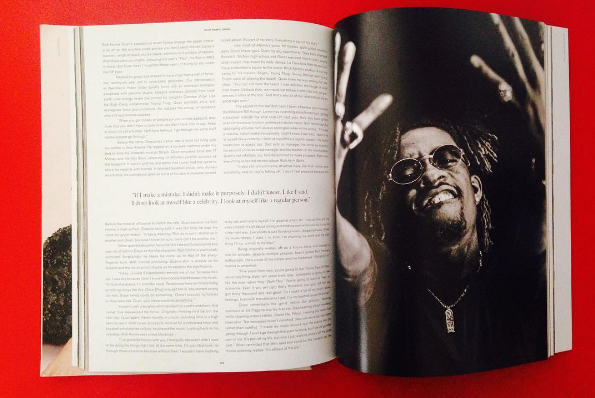
OG Ron C Interview

O.G Ron C has spent two decades cementing a mixtape empire and furthering Houston’s rap culture. With limited industry experience, the DJ founded Swishahouse Records alongside partner Michael “5000” Watts after they met at radio station KBXX in 1994. The duo promoted overlooked Northside talent, while music pioneer Robert “DJ Screw” Davis dominated the scene with his demiurgic Southside records. Not only did Ron C’s business savvy and unorthodox distribution methods helped make national stars of Paul Wall, Slim Thug, Chamillionaire and Mike Jones, but the O.G was also pivotal in uniting Houston’s swollen metropolis and calming the deep-rooted tensions between North and South by allowing both sides on his projects.

A decade after leaving Swishahouse, Ron C continues to grow the legacy of DJ Screw by bringing his city’s now famous sub-genre “chopped and screwed” to an international audience. The DJ keeps busy with a 24-hour radio station, charity music conference, thousands of mixtapes and some of the best selling chopped remixes out there. He spoke about his biggest financial regrets, experiences in mixtape distribution and the current status of his “chopped not slopped” brand.

What has been your most profitable venture to date?

My biggest profit was the Swishahouse days when I was working with Michael Watts. As a small businessman, I’m trying to climb back to that. The actual saying [“Chopped Not Slopped”] is bigger than the actual income, but maybe one day we’ll be at the [same level as] Swishahouse. We’re just getting our business together and preparing a proper launch in the summer time of 2016. What we’ve just been doing the last four, five years is really branding it, and there’s really been no profit.

Eiffel 65 Interview

When we think of one-hit wonders, we are reminded of the most embarrassing people on planet earth. The burnt out wannabe rocker, the deluded pop singer, Shifty Shellshockand Crazy Town, the guy who had that one novelty hit they play at the supermarket. These people are easy targets and often, well, idiots.

I have been to the mountain, friend, and I can confidently say that Eiffel 65, the Italian trio best known for their 1999 robo-hit “Blue (Da Ba Dee),” defy that stereotype. I know this, because I talked to E65 frontdude Jeffrey Jey, and he was awesome. He’s also multilingual and can sing, two skills my monotone self is lacking.

This isn’t the only thing that Eiffel 65 has taught me. I learned that like many groups known for being one hit wonders, the group are technically two hit wonders as their second single “Move Your Body” peaked in second place on the UK chart. Jeffrey also schooled me on the time he met Bon Jovi, singing “Blue” in Mandarin for the Iron Man 3 soundtrack and most importantly, having one hit is a hell of a lot better a lot better than none hits.

Is being a musician your full-time career at the moment?

Always. For the last 23 years that’s been the only thing I’ve been doing.

Even More New Stuff